March 4, 2026
February 20, 2026
January 30, 2026

January 30, 2026
January 30, 2026
January 30, 2026
January 30, 2026
December 17, 2025
The Babies are Coming to Cody Yellowstone
CODY, Wyo., March 9, 2026 – Winter will end soon, and spring will bring a time of rebirth with many wildlife species showing up in northwestern Wyoming’s Cody Yellowstone.
Although the first day of spring is March 21, for most residents of northwestern Wyoming’s Cody – situated east of Yellowstone National Park – the season truly begins when the babies make their debut.
“Spring really arrives here when the first bear cubs are spotted,” said Katrina Southern, marketing manager for Cody Yellowstone which is comprised of the towns of Cody, Powell and Meeteetse, a large swath of the Shoshone National Forest and about half of Yellowstone National Park. “We typically start to see mature bears sometime in March and mothers with their cubs in April and May. By the time our summer-season visitors begin to arrive, those cubs will have begun to learn the ropes of living in the Yellowstone wilderness.”
But spring is so much more than bears. Here are some of the critters visitors might see in the springtime:
- Bison calves are often the first of the young ones to make their debut. Reddish-colored, fuzzy-furred – they are often called “red dogs” – bison calves are quick studies, and they can keep up with their mothers as soon as two hours after birth. It takes a village to protect a bison calf, and all adult bison surround young calves when predators such as wolves and bears are nearby.
- Black bear cubs are born in their mother’s dens during the winter, and they spend the first couple of months of their lives nursing and dozing while their semiconscious mamas continue to slumber. The bear cubs finally see daylight around the month of April. Mothers spend the next 16 to 18 months teaching their babies how to survive in the wild.
- Moose cows aren’t quite as patient with their young. Once they give birth to a new calf – typically in May or June – they chase away the previous season’s calves. While not known for their intelligence, moose are predictably unpredictable, particularly when protecting a calf. Moose cows will chase human observers and other wildlife if they perceive a threat. Moose are frequently spotted near the Northeast and East Gates to Yellowstone.
- Bighorn sheep produce one or two lambs annually. Born in May or June, the lambs immediately begin the multi-year process of growing their horns. For this species, size matters. The horns on male Rocky Mountain bighorn sheep can weigh as much as 40 pounds, and the size of horns can influence a ram’s rank in the herd.
- Elk thrive throughout the region, particularly in East Yellowstone Valley along the North Fork of the Shoshone River. Usually born in late May and June, elk calves like most ungulates can walk within an hour or two of birth. An elk cow’s protective strategy when predators are near is to run away in hopes the predator will follow her and not notice the newborn lying motionless in the grass.
- Wolf pups begin appearing in April and May, and their packs will remain with them for three to 10 weeks as they learn bit by bit how to be a wolf in Yellowstone. Their playful antics with their littermates make wolf-watching in spring especially fun. While wolves roam throughout the Greater Yellowstone region, the best sightings are often in the Lamar Valley inside the park.
- River otters are also born with an entertainer’s spirit, but they are a little harder to spot. Born in March and April, these aquatic nomads stay with their moms for a year as they learn how to find fish and other food and swim underwater for minutes at a time.
- Eagles emerge in mid-April and fly from their nests three to four months after that. This remarkable once-endangered bird is one of 19 raptor species in the park. Northwestern Wyoming is home to bald eagles and golden eagles. Bald eagles feed on fish, and their nests can often be found in trees close to water. Golden eagles are more frequently spotted in valleys where they can accommodate their preference for rabbits and other small mammals.
Here’s how to observe wildlife safely during the spring season:
- Keep your distance. The National Park Service recommends staying at least 100 yards away from bears and wolves and 25 yards from other wildlife.
- Drive carefully and keep binoculars handy. Wildlife can often be spotted along the roads leading from Cody to the East and Northeast Gates to Yellowstone National Park.
- Early morning and dusk are the best times of the day to spot animals in the wild.
- Bison jams happen. Bison survive the harsh Yellowstone winter by avoiding unnecessary exertion, and that frequently means that herds will lumber down paved, cleared roads instead of through deep snow. Lucky travelers who encounter a so-called bison jam should savor the up-close view of these mighty creatures as they slowly pass stalled traffic. Visitors should stay in their vehicles, keep windows rolled up and not try to touch or speed up the animals.
- Never feed the wildlife.
The roads into Yellowstone National Park reopen to private wheeled vehicles on a staggered schedule. Cody offers access to the East and Northeast Gates. The East Gate, located 52 miles from downtown Cody, is projected to reopen to private vehicles on May 2. The opening date for the Northeast Gate varies, depending on the weather. Check here for the latest information on opening dates, road construction and more.
###
Home of the Great American Adventure, Cody Yellowstone is comprised of the northwestern Wyoming towns of Cody, Powell and Meeteetse as well as areas inside of Yellowstone National Park and the valley east of the entrance. The region is known for rodeos, authentic guest and dude ranches, world-class museums and recreational adventures that reflect the adventurous spirit of the visionaries and explorers who brought the remote region to the world’s attention.
Related hashtags:
#CodyYellowstone
#WildWatch
#CodyWyoming
#CenteroftheWest
#BuffaloBill
#Yellowstone
#ThatsWY
#OutsideYellowstone
Media contact:
Mesereau Travel Public Relations
720-284-1512
[email protected]
[email protected]
Read More
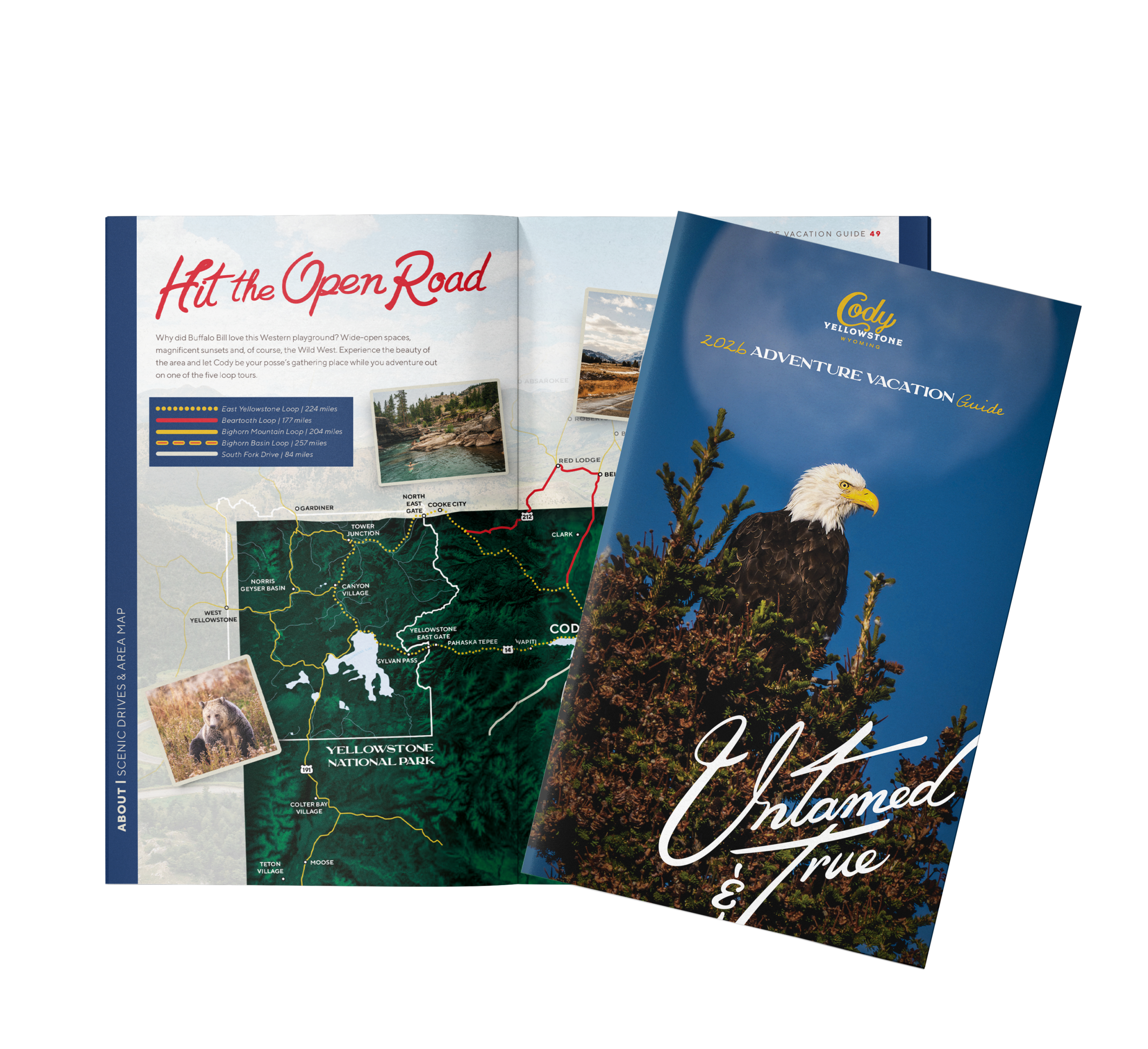
Get Your Free Cody Yellowstone Vacation Guide
Start planning your wild adventure with the help of our free guide.