March 4, 2026
February 20, 2026
January 30, 2026

January 30, 2026
January 30, 2026
January 30, 2026
December 17, 2025
Warm Water Meets Icy Air to Create All Sorts of Wild Winter Scenes in Cody Yellowstone
CODY, Wyo. Jan. 26, 2026 – When Cody Yellowstone is covered in a blanket of snow, things can get a little weird.
With Yellowstone National Park’s 2.2-million acres of geothermal stew of geysers, hot springs, fumaroles and mud pots, dizzying array of wildlife and a vast and diverse landscape, winter visitors are rewarded with an experience like no place else on Earth.
“Hot water shooting out of the ground to meet up with cold mountain air can result in some of the wildest winter scenes you’ll find anywhere,” said Katrina Southern, marketing manager for the region that includes the towns of Cody, Powell and Meeteetse, a large swath of the Shoshone National Forest and about half of Yellowstone National Park. “And if you thought snow days were great as a kid, you’ll be thrilled to be this ‘iceolated.’”
Here are just a few of the strange experiences visitors can expect during a winter visit to Cody Yellowstone:
Ice Fog. When the conditions are just right, visitors will see light-reflecting ice crystals floating in the air, giving the illusion of a fog. As the crystals drift through the air they become natural – and breathtaking – sun-catchers as they reflect the sun’s rays. Ice fog can be seen throughout the region, including some of the remote areas outside Yellowstone such as the Southfork of the Shoshone River and along the Buffalo Bill Scenic Byway to the East Gate of Yellowstone.
Monkey flowers. Only a few inches tall, these strange yellow wildflowers grow around hot springs during the winter. They are able to survive because of their short stature as well as the heat of the springs. The monkey flower grows in the summer season around streams and springs too.
Hoar frost. On clear and calm nights when water vapor transforms directly into ice crystals feathery ice formations are often found on wires, grass and trees. The name comes from the old English word “hoary” referring to its gray or white appearance. Cody visitors can often see hoar frost on fences that line some sections of the Buffalo Bill Reservoir located just a few miles from downtown Cody.
Ice sheet. In the winter Yellowstone Lake can have 136 square miles of ice. Ice can be two feet thick on the surface but some spots on the bottom of the lake might still be boiling because of the park’s thermal activity.
Ghost trees. During the winter, rime from hydrothermal mist accumulates on the branches of trees. When combined with falling snow, trees take on an eerie appearance and are known as “ghost trees.” These much-photographed trees are stunning to behold, but they can eventually cause tree limbs to break.
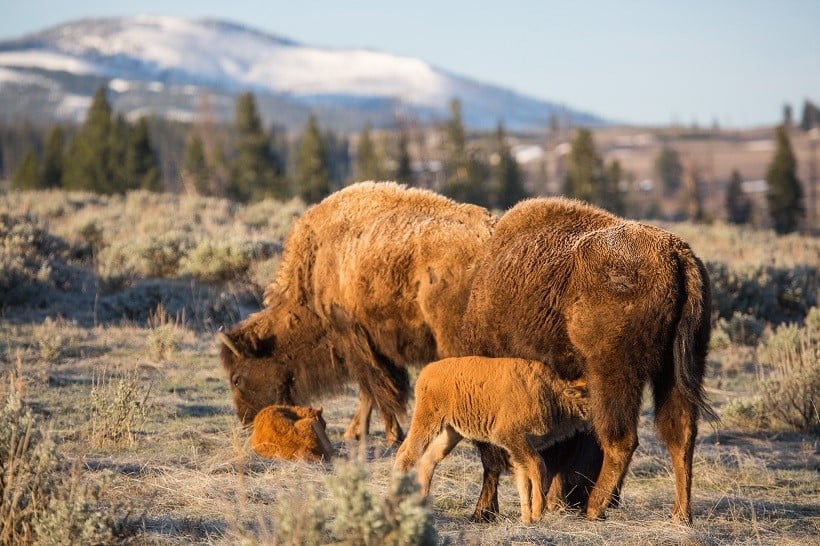
Snowball beards. Bison forage for food beneath the snow, and they can sometimes be seen with large clumps of snow and ice dangling from their chin hair. These oddly shaped “snowball beards” dangle precariously from a bison’s jaw until the weight forces them to break off, sometimes taking fur with them. Visitors can often see bison lumbering down the middle of paved roads just outside the park.
Snow sculptures. The park’s powerful winter wind blows snow around like dust, and the resulting drifts, patterns and formations, some strikingly and eerily symmetrical, are breathtaking. A great way to see snow sculptures is by cross country skiing on trails outside the East Gate and near the Wood River Valley Ski Touring Park.
But no snowmen. Even though the park receives an average of 150 inches of snow annually, visitors with a penchant for creating their own snowmen will be disappointed when they find they can’t build a snowman using Yellowstone snow. The snow in the park is so dry that it doesn’t stick together like wetter snow found in more humid areas. The exception is during the spring and fall when there are very early or late snowfalls and the snow tends to be wetter.
Snow mirrors. Shiny, icy patches of snow form when the snow melts slightly and then refreezes, creating a smooth, reflective surface. When conditions are right, entire fields and mountains can appear shiny and reflective from a distance.
Rivers that never freeze. The Madison River and many other rivers in the park never freeze despite the park’s cold temperatures because the rivers’ flows combine with hot water from geothermal features.
Geyser rain. When the near-boiling-temperature water from a geyser shoots into frigid air the resulting “geyser rain” looks like ice pellets floating back to Earth.
Starlight shadows. Thanks to Yellowstone’s dark skies, it’s possible to see one’s shadow created by starlight alone. The winter snow cover helps create the perfect surface for the shadows. The shadows can be faint, so one must allow enough time away from other light for the eyes to adequately adjust to the dark. But don’t forget to look up as well, as the star show is incredible, again thanks to the lack of light pollution.
###
Home of the Great American Adventure, Cody Yellowstone is comprised of the northwestern Wyoming towns of Cody, Powell and Meeteetse as well as areas inside of Yellowstone National Park and the valley east of the entrance. The region is known for rodeos, authentic guest and dude ranches, world-class museums and recreational adventures that reflect the adventurous spirit of the visionaries and explorers who brought the remote region to the world’s attention.
Related hashtags:
#CodyYellowstone
#WildWatch
#CodyWyoming
#CenteroftheWest
#BuffaloBill
#Yellowstone
#ThatsWY
#OutsideYellowstone
Media contact:
Mesereau Travel Public Relations
720-284-1512
Read More
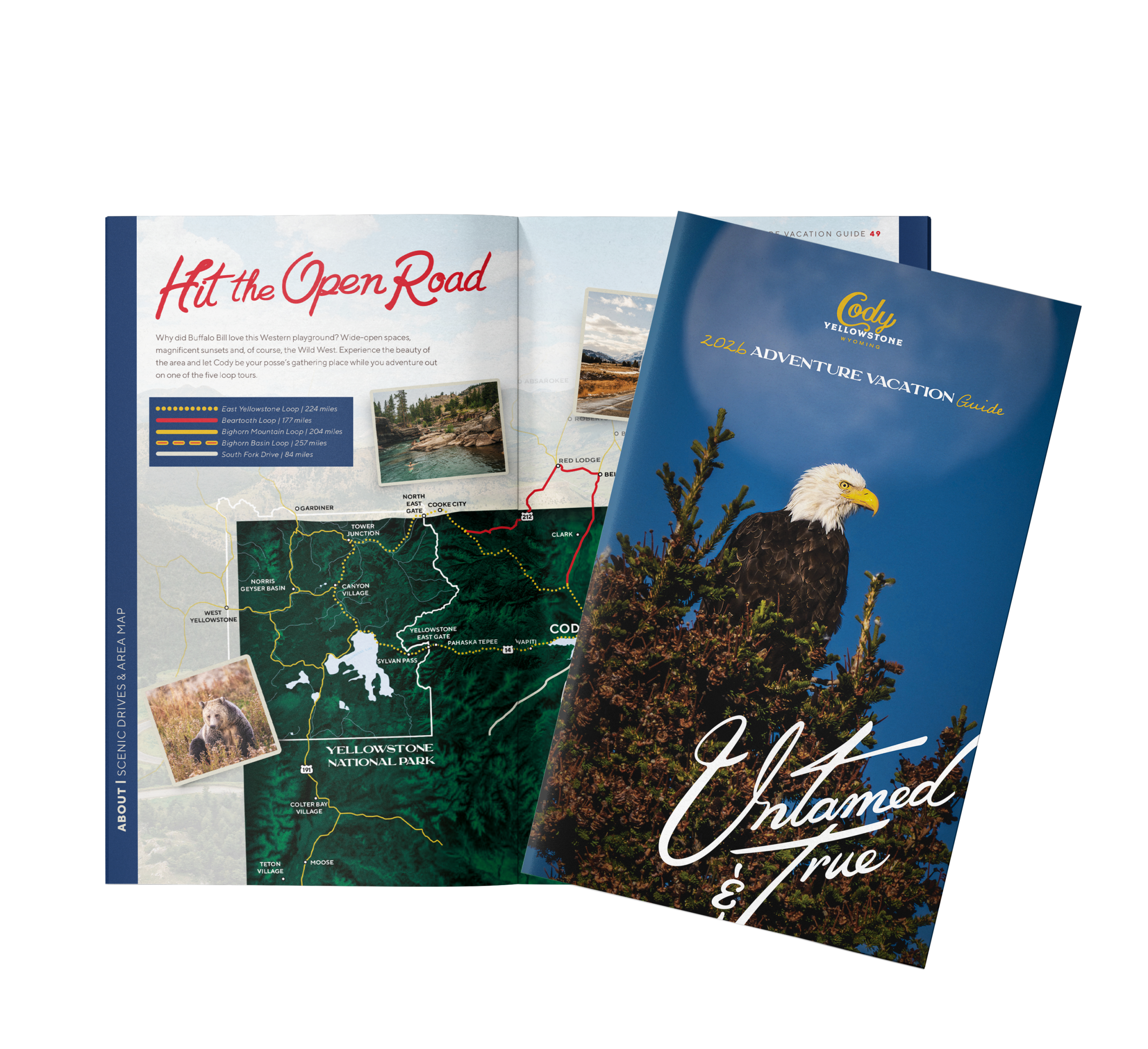
Get Your Free Cody Yellowstone Vacation Guide
Start planning your wild adventure with the help of our free guide.