Winter FAQs
What makes winter in Cody Yellowstone so weird?
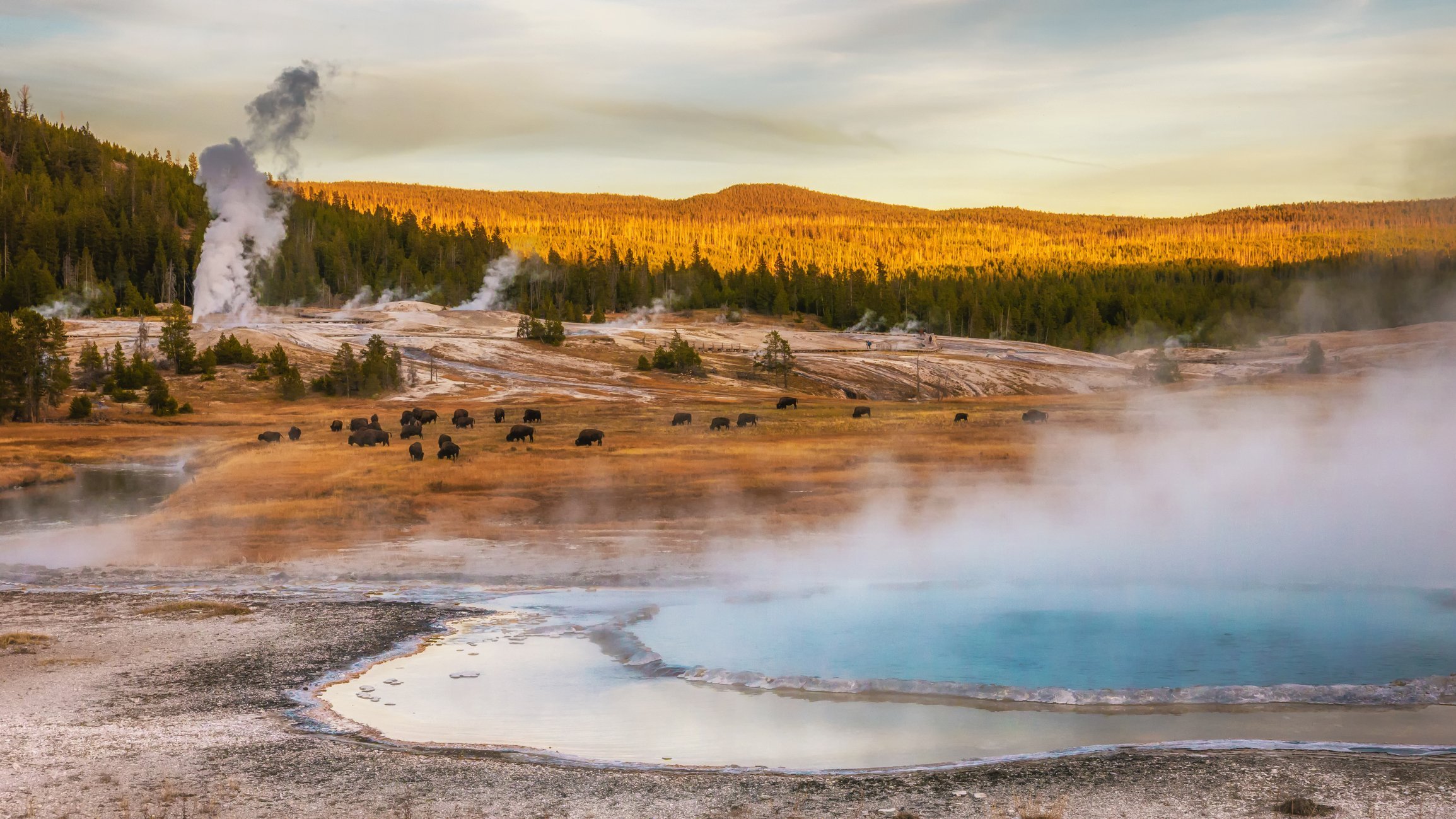
Winter here is a rare mix of deep cold and geothermal heat. Steam rising into frigid air creates surreal effects—like ice fog, rime-covered trees, and icy geyser rain—that you won’t see in most snowy destinations.
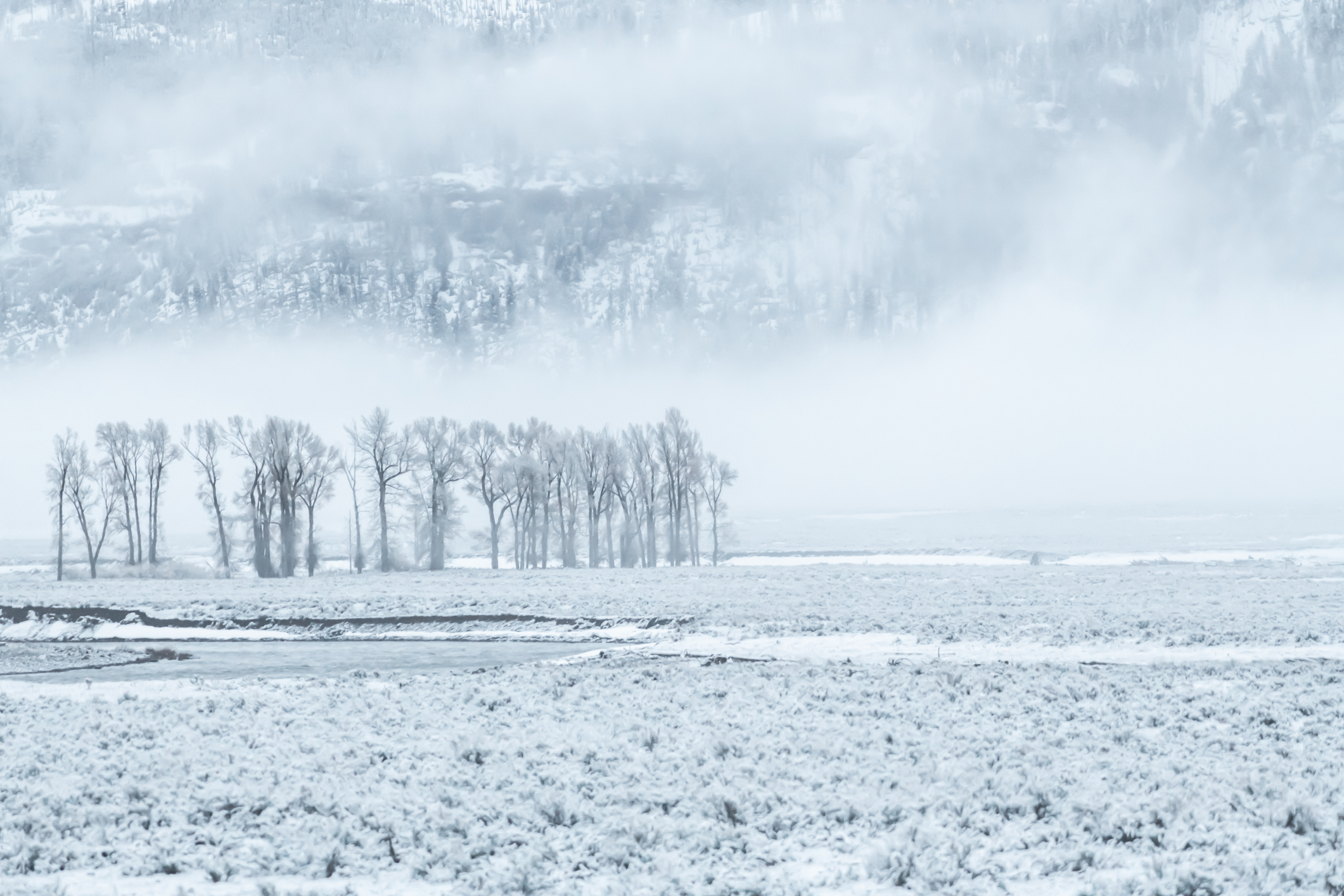
Can you really see ice fog in the Cody area?
Yes—when temperatures and humidity line up, ice crystals can hang in the air and shimmer like fog. It can happen in valleys and near rivers, including areas along the Southfork of the Shoshone River and on the Buffalo Bill Scenic Byway toward Yellowstone’s East Gate.
What are ghost trees in Yellowstone?
Ghost trees are trees coated in rime ice from hydrothermal mist, often combined with falling snow. The buildup can make branches look pale and eerie—and can get heavy enough to break limbs.
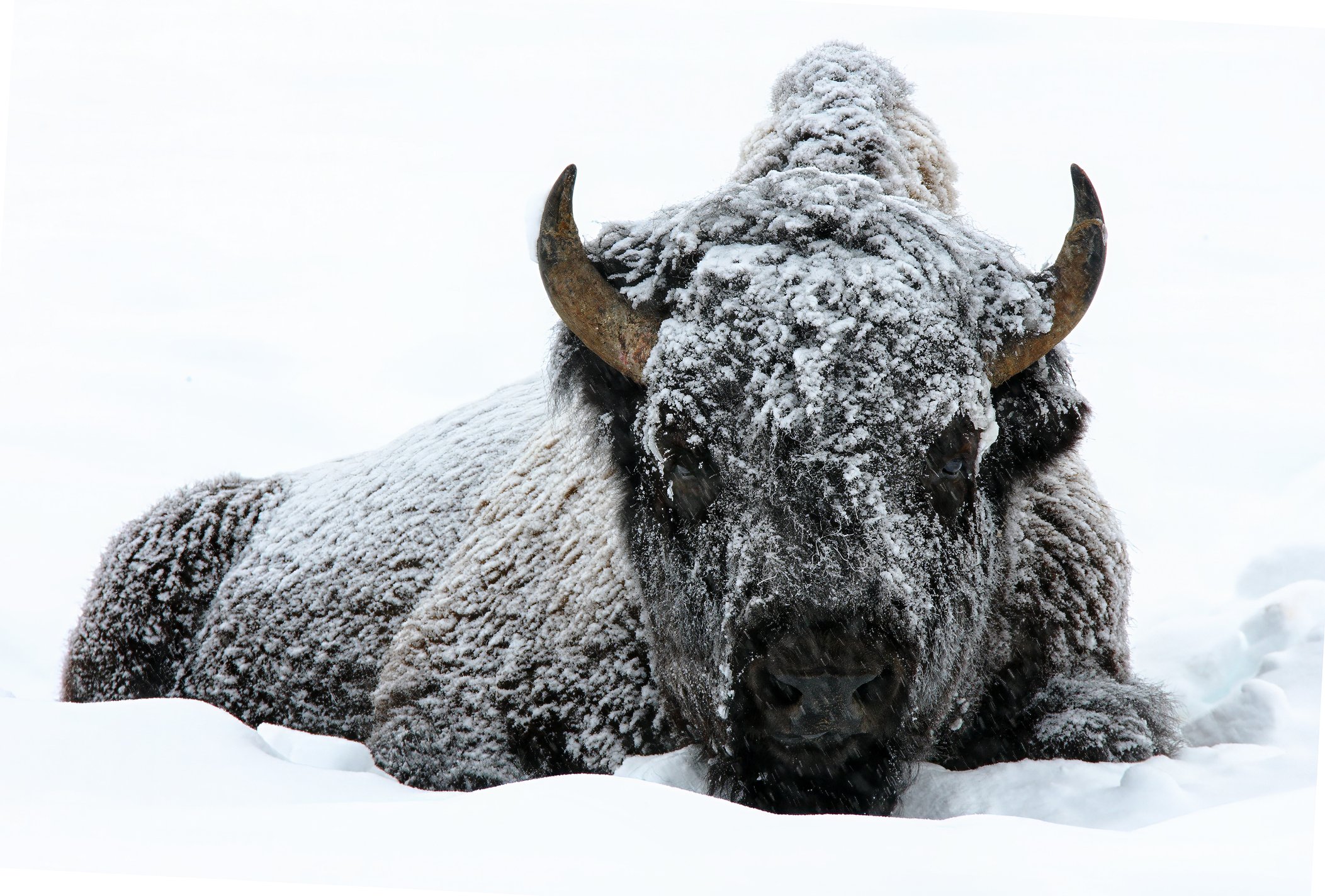
What are bison snowball beards?
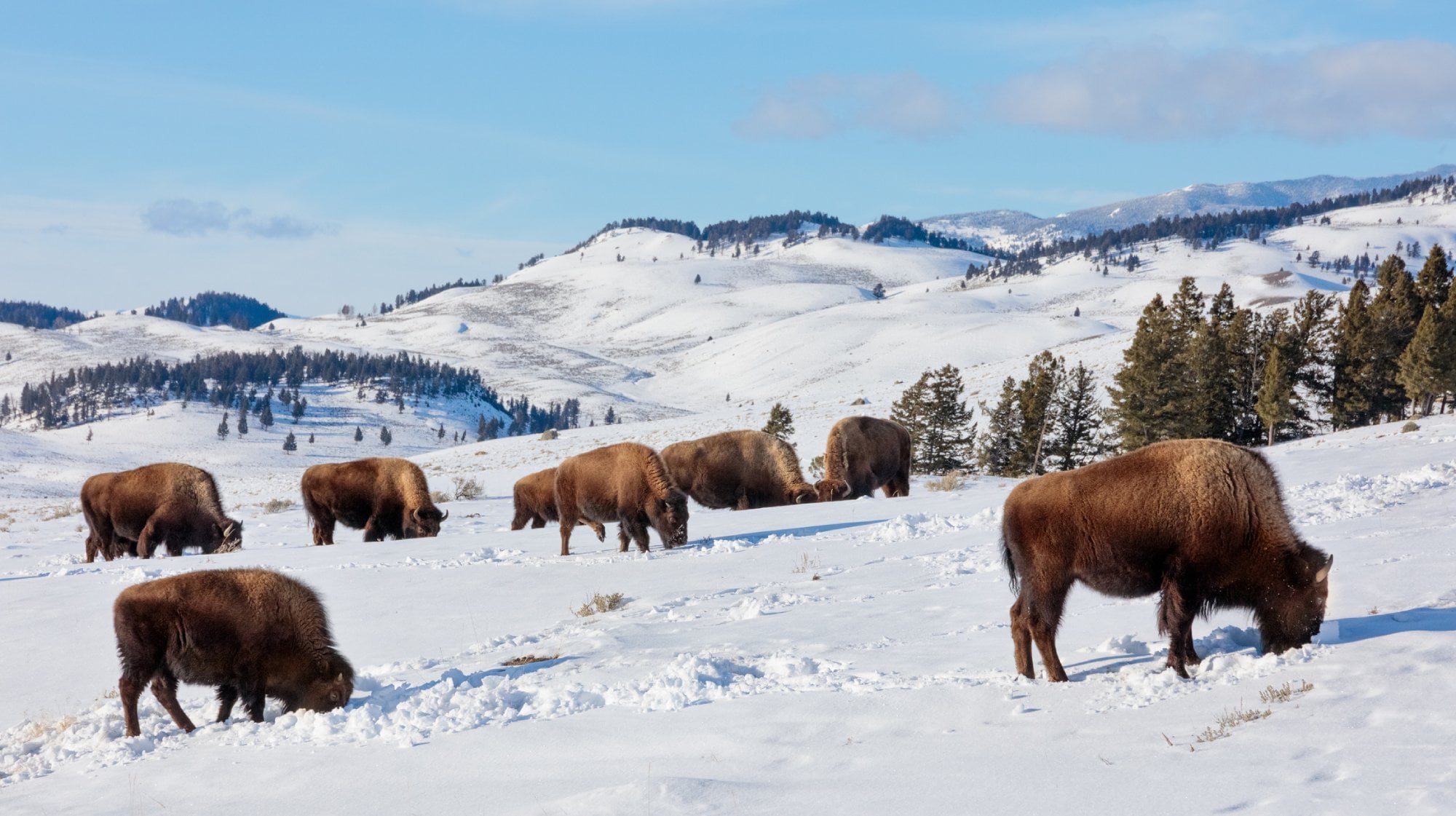
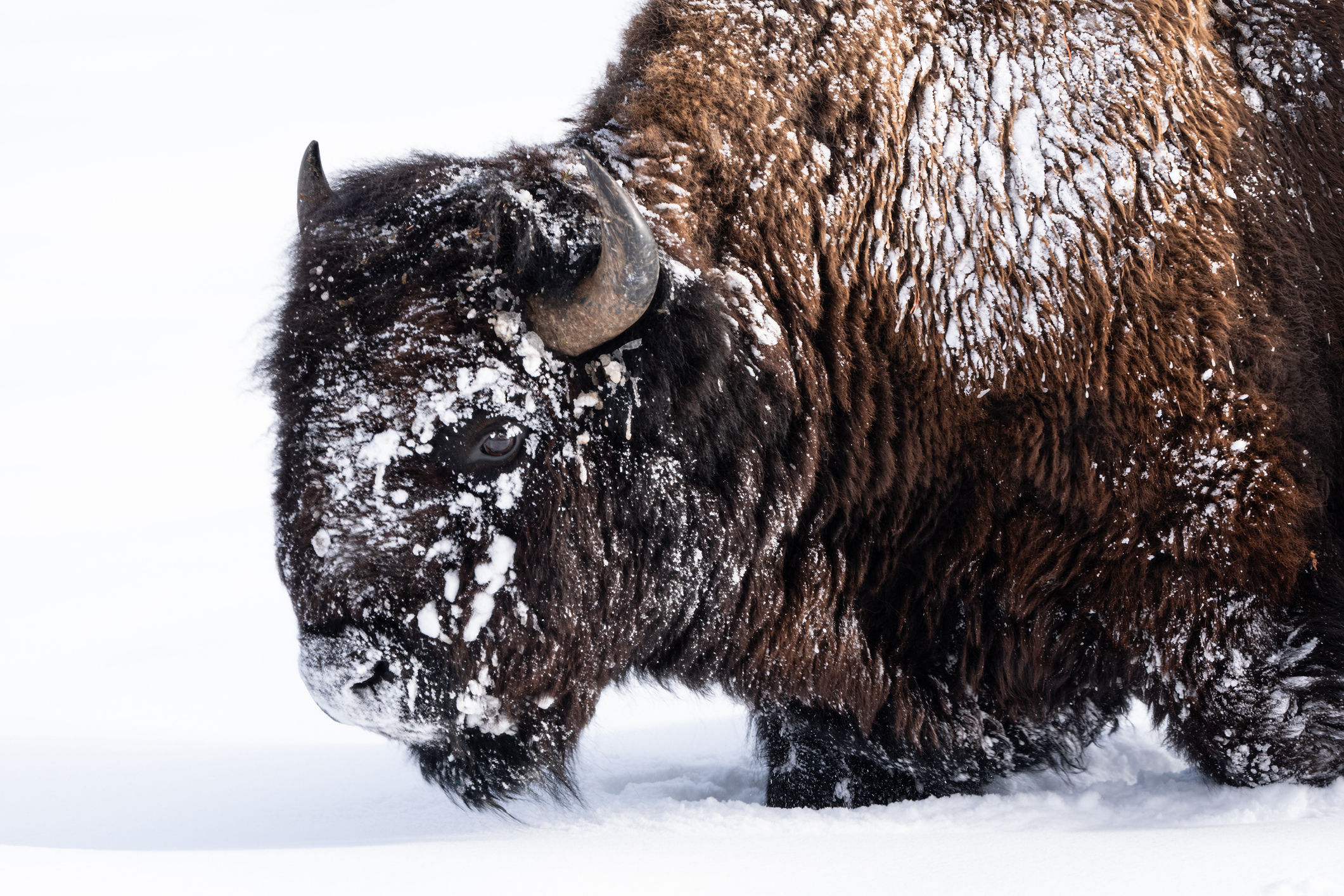
As bison dig and forage through snow, snow and ice can clump onto their chin hair and hang like icicles—creating what looks like a dangling snowball beard. They often drop off once they get heavy enough.
Does Yellowstone Lake really freeze over in winter?
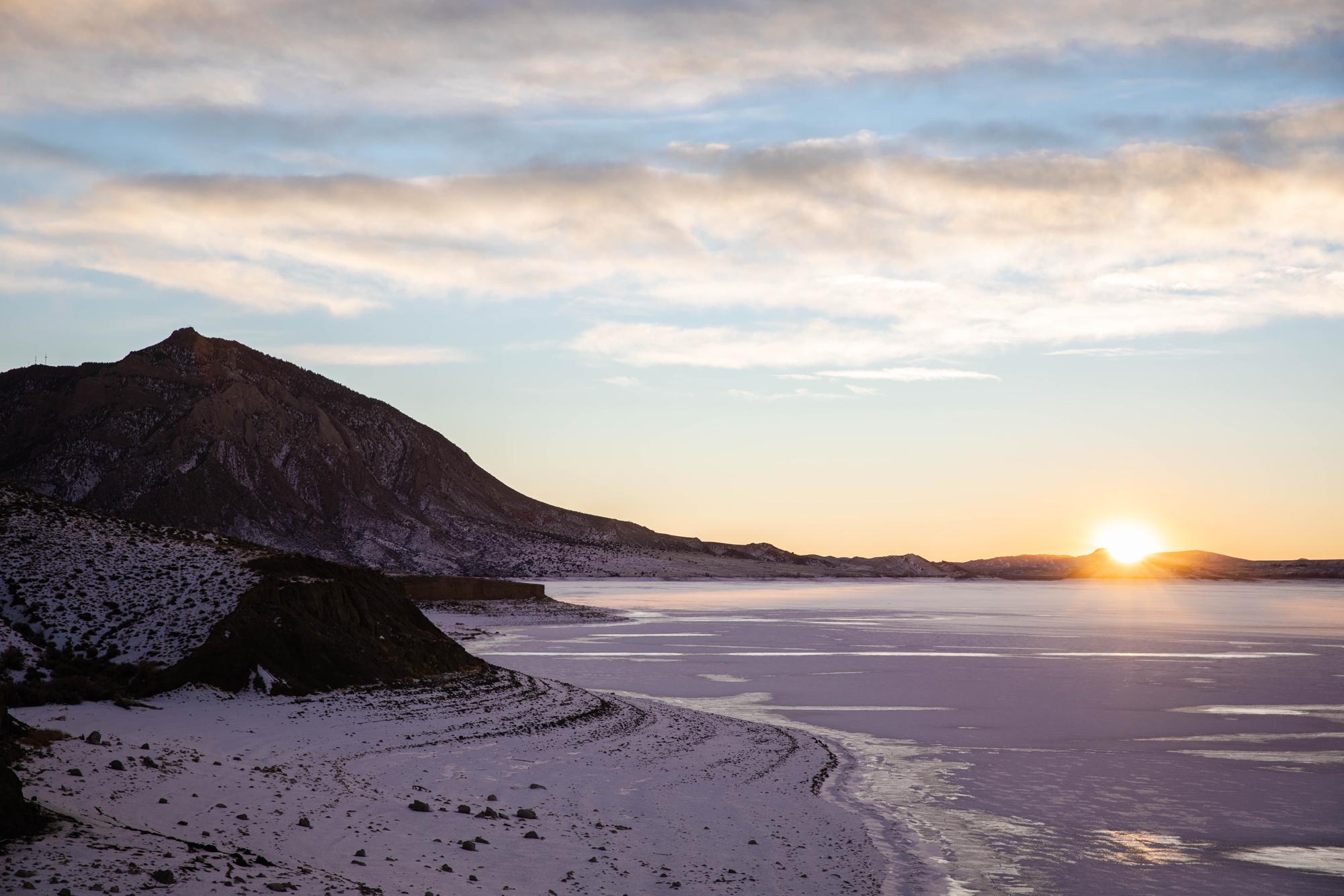
Yes. In winter, Yellowstone Lake can develop a massive ice sheet that stretches for miles. Conditions vary each year, but it’s one of the most dramatic winter sights in the region.
Why can’t you build a snowman with Yellowstone snow?
Much of Yellowstone’s snow is very dry and powdery, so it doesn’t pack well. Wetter snow is more likely during early or late-season storms (spring or fall), when conditions can be a bit more snowman-friendly.
What are snow sculptures and where can you see them?
Strong winter winds move snow into ripples, ridges, and striking drifts—like natural sculpture. A great way to spot them is cross-country skiing on trails outside the East Gate and near the Wood River Valley Ski Touring Park.
Can you really see your shadow by starlight in Yellowstone?
On very dark, clear nights, it can be possible to see faint shadows created by starlight—especially with bright snow reflecting light. Step away from artificial light and give your eyes time to adjust.
Is it safe to explore geothermal areas in winter?
Geothermal areas are incredible in winter, but they require extra caution. Stay on boardwalks and marked trails—snow can hide thin ground and hazards near hot springs and vents.
What should I pack for a winter trip to Cody Yellowstone?
Think warm, windproof, and layered: insulated boots with traction, wool socks, base layers, a heavy coat, gloves, a warm hat, hand warmers, and a thermos. Add a headlamp (for early dark) and a camera battery backup (cold drains batteries fast).